
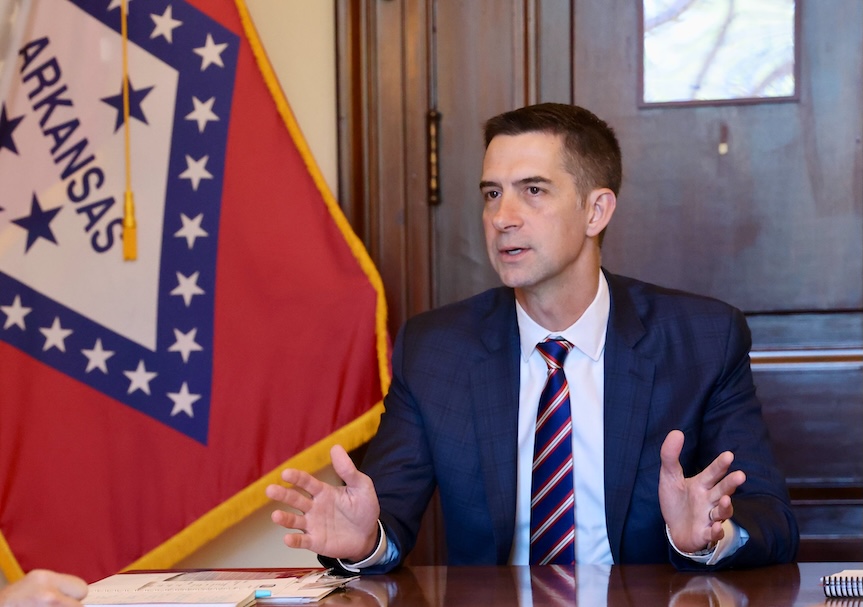

Arkansas – “For years, foreign nationals, including from Communist China, have systematically exploited America’s surrogacy and birthright citizenship laws,” Arkansas Sen. Tom Cotton wrote in a social media post this week. “Thankful State Department is taking steps to end this practice.”
Cotton’s comments came after the U.S. Department of State announced renewed efforts to combat birth tourism, a practice in which foreign nationals travel to the United States with the primary purpose of giving birth so their child will obtain U.S. citizenship by birth.
In a statement shared on social media, the State Department said the agency is “defending the integrity of U.S. citizenship by ending illegal birth tourism schemes” and emphasized that foreigners are not permitted to obtain a visitor visa for the primary purpose of securing U.S. citizenship for a child through birth in the United States.
The issue has become a renewed focus of the Trump administration’s immigration enforcement efforts. According to the State Department, birth tourism is not a permissible basis for obtaining a visitor visa, a policy that has been in place since regulatory changes were implemented in January 2020.
The department states that traveling to the United States primarily to give birth for the purpose of obtaining citizenship for a child does not qualify as legitimate tourism under visa regulations.
The State Department’s current visa guidance explicitly states that birth tourism is not permitted on visitor visas.
Applicants seeking tourist visas must demonstrate a legitimate purpose for travel and may be required to provide evidence regarding the purpose of their trip, their intent to leave the United States after their visit, and their ability to cover travel expenses.
Recent enforcement actions suggest the administration is taking a more aggressive approach.
Reports indicate that hundreds of visas have been revoked as federal authorities work to identify and dismantle organized birth tourism networks operating in multiple regions around the world.
Administration officials have argued that such efforts are necessary to prevent abuse of the U.S. immigration and visa systems.
The debate over birth tourism is closely tied to the broader discussion surrounding birthright citizenship, which is rooted in the 14th Amendment to the U.S. Constitution.
Under longstanding legal interpretations, most children born on U.S. soil automatically acquire American citizenship regardless of their parents’ nationality or immigration status.
However, the Trump administration has sought to challenge aspects of that interpretation through executive actions and legal arguments that are currently being examined in federal courts.
Supporters of stricter enforcement, including Cotton, argue that birth tourism creates loopholes that can be exploited by foreign nationals seeking future immigration benefits for their families.
Critics, however, contend that existing laws already address visa fraud and warn that increased scrutiny could affect legitimate travelers and pregnant women seeking lawful entry into the country.
The State Department has not announced any new changes to birthright citizenship itself, but officials say they will continue enforcing visa rules designed to prevent travelers from entering the United States primarily to obtain citizenship benefits for a child through birth tourism.