
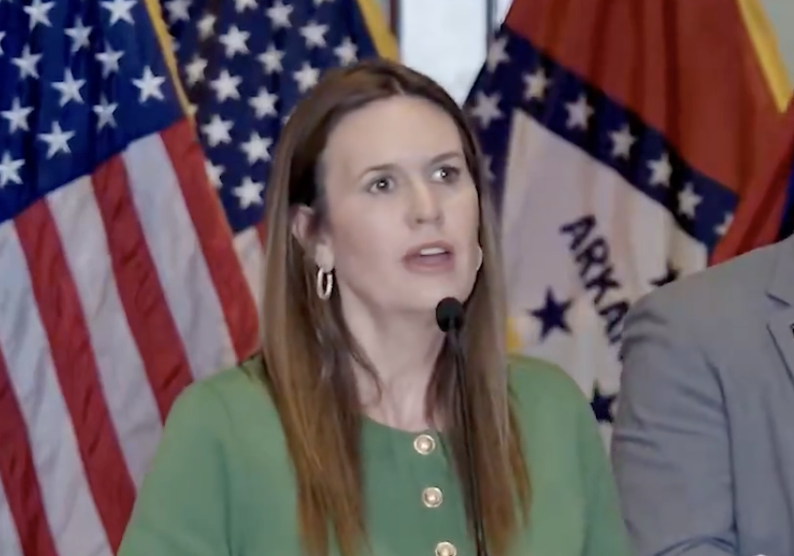

Arkansas – Arkansas Gov. Sarah Huckabee Sanders criticized Michigan Democratic U.S. Senate candidate Abdul El-Sayed after resurfaced comments about America’s founding drew renewed attention, arguing that his views disqualify him from holding higher office.
“This is from the same guy whose number one campaign surrogate said ‘America deserved 9/11,'” Sanders wrote on X. “He has no business being on city council much less in the U.S. Senate.”
Her remarks followed the circulation of a video shared by RNC Research showing El-Sayed discussing America’s history during a public appearance. In the clip, El-Sayed said the United States was “founded on the removal of a whole people” and “founded on the idea that we could compromise on whether or not people as a function of the color of their skin could be enslaved by other people.”
The comments have become the latest flashpoint in Michigan’s closely watched U.S. Senate race, with Republicans arguing they reflect a negative view of the nation’s founding, while El-Sayed and his supporters say he was describing historical facts rather than condemning the country itself, according to the New Yorker.
El-Sayed, a physician and former Wayne County public health director, won Michigan’s Democratic Senate primary after running a progressive campaign focused on expanding healthcare access, lowering prescription drug costs, labor rights, and reducing corporate influence in politics. His victory over Rep. Haley Stevens marked one of the Democratic Party’s most closely watched primary contests of the 2026 election cycle.
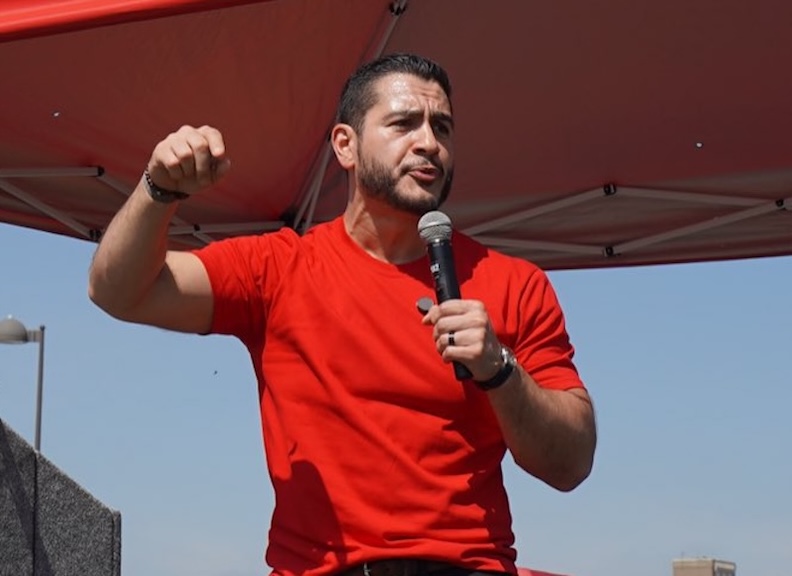
Throughout the campaign, El-Sayed has argued that understanding America’s history—including slavery and the forced removal of Native Americans—is necessary to address ongoing challenges facing the country. His campaign has frequently emphasized issues involving healthcare, economic opportunity, and racial equity while maintaining that acknowledging historical injustices does not diminish patriotism.
Sanders’ criticism also referenced controversy surrounding political commentator Hasan Piker, whom she described as El-Sayed’s “number one campaign surrogate.” Piker has previously faced criticism over remarks interpreted by critics as suggesting that “America deserved 9/11.” Republicans have increasingly tied El-Sayed to Piker’s comments, arguing that the Senate candidate has failed to adequately distance himself from the online personality, New York Post reported.
The relationship has become part of a broader Republican messaging strategy ahead of the general election. GOP officials and outside groups have attempted to portray El-Sayed as too progressive for Michigan voters by highlighting his past positions on policing, immigration, and Israel, as well as his associations with prominent progressive activists.
Supporters of El-Sayed have rejected those characterizations, arguing that many of the attacks misrepresent his record or take past statements out of context. Independent fact-checking by Bridge Michigan found that some campaign advertisements targeting El-Sayed contained misleading or incomplete claims about his past positions, though the outlet also noted evidence supporting criticism of some earlier policy statements, including his previous support for the “defund the police” movement before later distancing himself from the slogan.
Michigan’s Senate race has attracted national attention because it is expected to play a significant role in determining control of the U.S. Senate after the 2026 midterm elections. Republicans have rallied behind former U.S. Rep. Mike Rogers, while Democrats have united behind El-Sayed following his primary victory. The contest has already become one of the nation’s most expensive Senate races, drawing millions of dollars in outside spending from political action committees and advocacy groups.
Sanders, who served as White House press secretary during President Donald Trump’s first administration before being elected governor of Arkansas, has remained one of Trump’s strongest allies and has frequently criticized progressive Democratic candidates on issues ranging from education to immigration and national identity.
Her latest comments add to the growing national debate surrounding El-Sayed’s candidacy as Republicans seek to define him before the general election, while Democrats argue his campaign represents a new generation of progressive leadership focused on economic and healthcare reforms.