
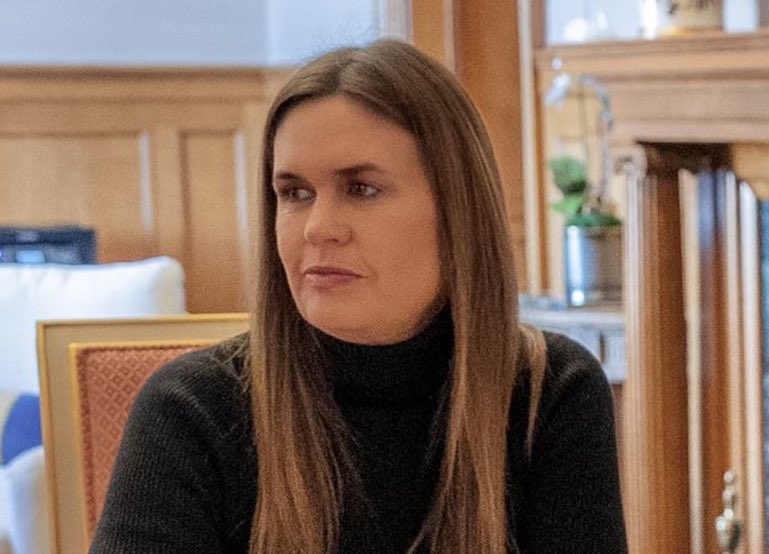

Arkansas – “Democrats’ top candidate in Texas won’t eat meat, their leading nominee in Wisconsin hates Thanksgiving, and now their guy in Michigan is coming out against football. Banner year, guys.”
Arkansas Gov. Sarah Huckabee Sanders took aim at Democrats on social media Tuesday after past comments from Michigan Democratic Senate nominee Abdul El-Sayed resurfaced, drawing renewed attention to his views on football and the culture surrounding the sport.
Sanders commented on X featuring a quote attributed to El-Sayed in which he said, “Football is very much associated with a particularly masculine and oftentimes toxically masculine culture.”
Her post came as El-Sayed, who recently won the Democratic primary for Michigan’s U.S. Senate seat, faced growing scrutiny over remarks he made years earlier about football. The comments were not made recently, despite their renewed circulation online in August 2026.
The quote came from an August 2021 episode of El-Sayed’s America Dissected podcast, titled “Football on the Brain with Dr. Kathleen Bachynski.” During the episode, El-Sayed discussed his own history playing football and his concerns about the sport’s health consequences, including repeated head trauma and the risks associated with chronic traumatic encephalopathy, or CTE.
El-Sayed’s comments were more nuanced than simply opposing football. At the beginning of the podcast, he said football had been an important part of his childhood and that he loved the camaraderie and teamwork associated with the sport. He explained that he had played from middle school through high school and described football as one of the places where he felt a sense of belonging.
However, he also questioned what the sport taught young men about toughness and masculinity.
During his conversation with Bachynski, a public-health researcher who studied the risks associated with football, El-Sayed raised concerns about the culture surrounding the game and the expectation that players should push through pain and avoid showing vulnerability. He later described football as being associated with a “particularly masculine” and “oftentimes toxically masculine” culture.
The remarks resurfaced after El-Sayed’s victory in Michigan’s Democratic Senate primary on Aug. 5. He defeated U.S. Rep. Haley Stevens and advanced to the general election, where he is set to face Republican Mike Rogers. Reuters described El-Sayed’s primary victory as a significant win for the Democratic Party’s progressive wing.
The resurfaced football remarks quickly became part of the Republican criticism of El-Sayed.
The Washington Times reported Aug. 11 that old posts and podcast comments had resurfaced showing El-Sayed criticizing football, fireworks and other aspects of American culture, The Washington Times reported.
The Daily Caller likewise reported that El-Sayed had written and spoken about football in the context of toxic masculinity, including a 2021 discussion that questioned aspects of the sport’s culture. Fox News also highlighted the resurfaced comments, reporting on El-Sayed’s description of football culture as “toxically masculine,” Fox News reported.
The controversy escalated further when Rogers criticized El-Sayed over his past remarks during an appearance on Fox News. Rogers accused his Democratic opponent of opposing things he described as traditional American activities, including football and Fourth of July fireworks.
El-Sayed responded by challenging Rogers to settle the dispute on the football field.
“Since you’re too afraid to debate me, how about you ‘hold me accountable’ on a football field instead?” El-Sayed wrote, challenging Rogers to a tackle football game without pads.
The unusual challenge generated additional coverage and criticism. The New York Post reported that El-Sayed was mocked after proposing the no-pads football matchup, while People reported that the challenge came amid an increasingly personal feud between the two Senate candidates.
El-Sayed’s campaign and public statements have emphasized that his position on football is connected in part to public-health concerns rather than a simple opposition to the sport. His 2021 podcast discussion focused heavily on repeated head impacts, youth football and the long-term consequences of brain injuries.
During that discussion, El-Sayed acknowledged that he continued to enjoy watching football despite his concerns and said the sport had taught him lessons about teamwork and leadership. His criticism centered on whether those benefits justified the health risks and cultural expectations associated with the game.
The resurfacing of the comments nevertheless gave Republicans another line of attack against the Democratic nominee, particularly as the Michigan Senate contest begins taking shape ahead of the November election.
Sanders’ post added a national political voice to the controversy. The Arkansas governor used El-Sayed’s remarks as part of a broader jab at Democratic candidates, framing the football controversy alongside attacks on other Democratic nominees.
The dispute also illustrated how comments made years before a political campaign can become central to a modern campaign fight. In El-Sayed’s case, remarks from a 2021 podcast have now become a recurring subject of criticism following his emergence as the Democratic Senate nominee.
As the Michigan Senate race continues, El-Sayed’s opponents are likely to keep highlighting his past statements, while his campaign has an opportunity to provide additional context about his views and his long-standing connection to football.
For now, Sanders’ post has helped push the resurfaced remarks beyond Michigan and into the broader national political conversation.