
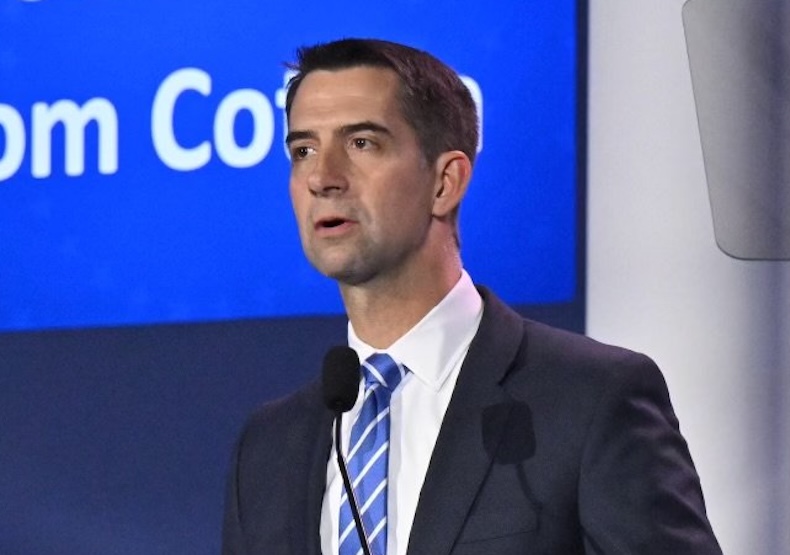

Arkansas – Arkansas Sen. Tom Cotton criticized the U.S. Supreme Court’s decision reaffirming birthright citizenship, arguing that the ruling should strengthen efforts to secure the nation’s borders and increase immigration enforcement.
In a statement posted on X following the Court’s decision, Cotton said, “The best response to the Court’s devastatingly wrong ruling on birthright citizenship is more deportations, a more secure border, and more prosecutions of foreign criminals.”
The Republican senator added that he intends to continue supporting additional immigration enforcement measures in Congress.
“I will continue to work to give the Admin the resources needed to deport illegals & protect Arkansans,” Cotton wrote.
Cotton’s comments came after the Supreme Court rejected President Donald Trump’s executive order that sought to deny automatic U.S. citizenship to children born in the United States to parents who were in the country illegally or temporarily. In a 6-3 decision, the Court reaffirmed the long-standing interpretation of the Fourteenth Amendment’s Citizenship Clause, concluding that children born on U.S. soil are citizens at birth, with only limited exceptions, Reuters reported.
Chief Justice John Roberts wrote the majority opinion, joined by Justices Sonia Sotomayor, Elena Kagan, Amy Coney Barrett, and Ketanji Brown Jackson. Justice Brett Kavanaugh agreed that the executive order could not stand under existing federal law, while Justices Clarence Thomas, Samuel Alito, and Neil Gorsuch dissented. The majority concluded that more than a century of constitutional interpretation, including the Court’s landmark 1898 decision in United States v. Wong Kim Ark, supports citizenship for nearly everyone born in the United States.
The executive order, signed by Trump on his first day back in office, would have prevented automatic citizenship for children born to parents who were either in the country unlawfully or present temporarily, such as students or certain visa holders. However, lower federal courts blocked the policy before it ever took effect, and the Supreme Court’s ruling leaves those injunctions in place.
Cotton has long supported stricter immigration enforcement and has repeatedly called for stronger border security, expanded deportations, and tougher penalties for individuals who enter the United States illegally. His latest comments reflect a broader argument among many Republican lawmakers that, despite the Court’s decision, Congress and the executive branch should continue pursuing policies aimed at reducing illegal immigration.
Supporters of the Court’s decision argued that the ruling preserves a constitutional protection that has existed for generations and prevents presidents from changing the meaning of the Fourteenth Amendment through executive action. Civil rights groups and immigration advocates praised the outcome, saying it protects hundreds of thousands of children born in the United States each year from uncertainty over their citizenship status.
Opponents of the decision, including Cotton, have argued that the current interpretation of the Citizenship Clause encourages illegal immigration and that stronger enforcement measures are needed even if constitutional changes remain out of reach. While Trump suggested Congress could revisit the issue legislatively, legal scholars note that because the Court’s majority grounded its decision in the Constitution, altering the rule would likely require a constitutional amendment rather than ordinary legislation.
The decision represents one of the Supreme Court’s most significant immigration rulings in recent years and is expected to shape future debates over immigration policy, executive authority, and the scope of constitutional citizenship protections.